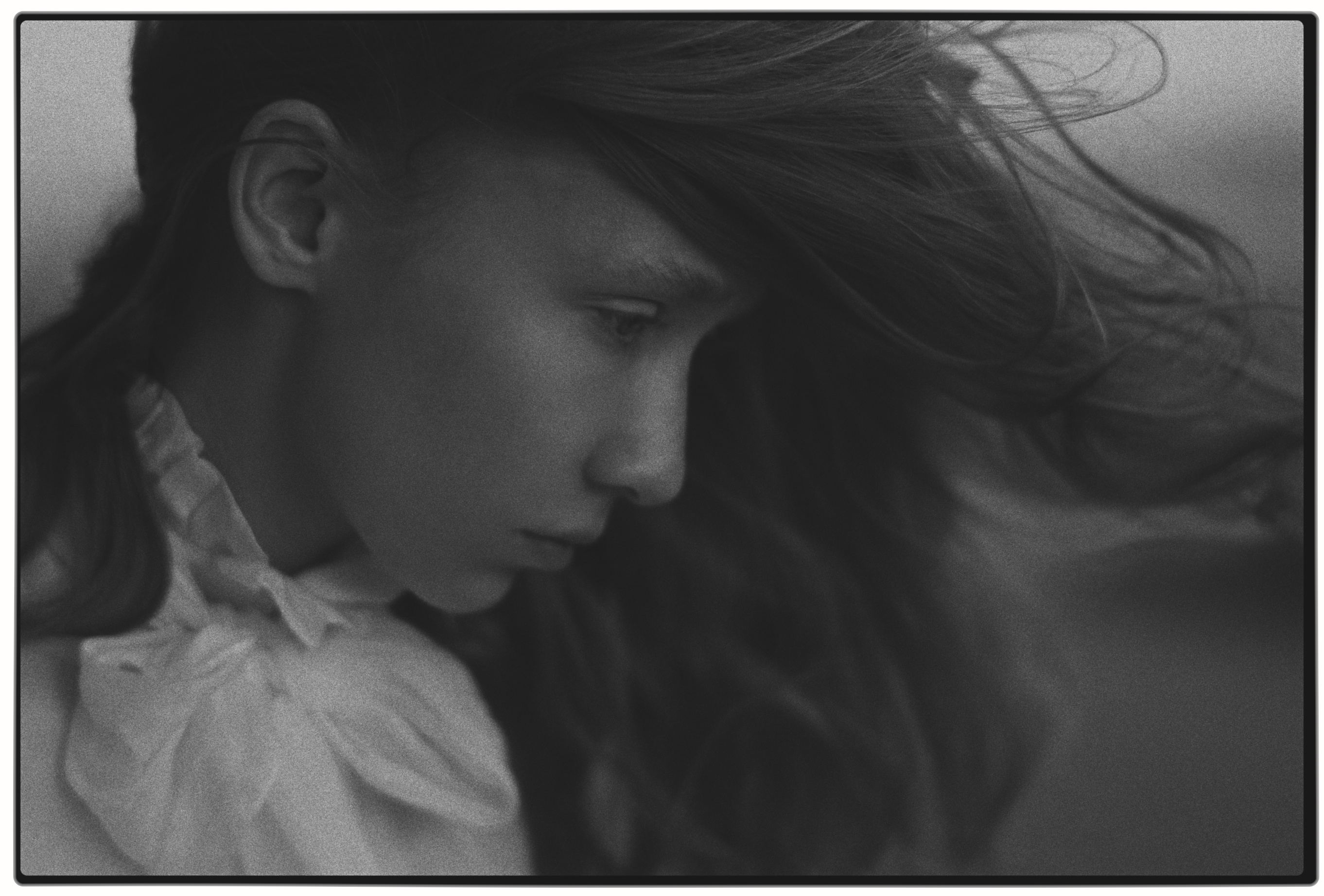
The aesthetics of film
photography, for you
The analogue tradition has stood the test of time, and its aesthetics are a choice you never have to apologise for. In the age of the endless feed and generated pictures, a photograph that has passed through light and chemistry is a rarity again — and a sign of taste.
No need to agonise over dozens of controls — let history do the work for you. Simply choose the lens, the film, the paper and the printing. You never imagined a digital photograph could look like this.


Not filters — the magic of light
ZERNO takes light along the same path it has taken in photography for a century and a half: filter, lens, film, development, print. Not colour matching, not a filter over the picture — a computational physical model in which everything happens for real, only in numbers. We compute how the rays of light travel, we grow the grain and we print the result as a separate step — down to the structure of the paper. That is why it all looks so pleasing and refined: nature has excellent taste.
Lenses with character
Dark corners, a soft glow from the glass itself, swirly bokeh, sharpness that melts towards the edge of the frame. Each lens has its own, and all of it obeys the aperture: stop down and the glass calms, open up and it draws again. This is behaviour, not a flat "vintage" preset.
Film glow and the subtle effects
Bright light punches through the emulsion, bounces off the base and glows around street lamps, windows and speculars on water — that is halation, the most recognisable mark of film. Beside it, the smaller things: accentuated borders between light and shade, the softness of the emulsion itself, the way the layers of a colour negative mute each other's colour.
Grain grows, it isn't sprinkled on top
The picture is assembled from the grains themselves, as on film — on colour film, from clouds of dye. So a thin branch or a hair thickens, breaks and dissolves in the grain: that is what happens on a print, and it is what never happens with noise laid over a finished frame.
Printing is a separate step
A negative still has to be printed, and that is half the picture: its own paper, its own contrast, borders and rebate. Silver, minilab, scan, the printing press — or one of fourteen hand processes, from blue cyanotype to bromoil, which is worked in with a brush.
Every frame its own
The negative's rebate, a Polaroid's blotches, the grain, the raggedness of a brush stroke — every frame has randomness of its own. It is not recomputed while you look and edit; and if you don't like the pattern — reroll the dice.

What's inside ZERNO · version 5
photographs have already passed through ZERNO
is truly beautiful.
the softness and breath of film.
What it costs
- Two activations — any two computers, Mac or Windows
- Every version of the program released during the year
- The new films, lenses, printing, filters and presets that arrive during the year
Five days free — the whole program, with nothing held back: download it, press "Try it for 5 days" in the licence window — and everything works; the files come out exactly the same as with a licence. You need the internet at every launch — the server keeps count of the days. When the five days are over, your projects stay where they are; a licence opens them as they were.
Card payment on the site is currently available for cards issued in Russia only. From anywhere else, write to ask@zerno.photo — we will sort out the payment and send your activation code the same day.
The conditions are in the licence agreement.